

Overview
About Cross-Connection
At JCSD, we work hard to ensure that the water we deliver to you meets and exceeds all drinking water regulatory standards. Cross-connections are points in the water system where non-potable water sources – which are unsafe for drinking — on your property could contact drinking water. Examples of non-potable water sources include washwater in a bucket, swimming pools, landscape irrigation systems, pesticide and fertilizer sprayers, booster pumps, and other appliances and equipment that use water. Normally, drinking water flows one way into your property. However, unprotected cross-connections could allow contaminated water from non-potable sources on your property to backflow—or reverse flow—into your drinking water system, impacting your property’s water quality and posing a risk to the drinking water system and public health.
Cross-connection is a partnership between JCSD and our customers. Your understanding of cross-connections and the steps you can take to protect against them helps prevent contamination of your drinking water supply, keeping it safe for you and the community.
For more information contact:
Contact information
Technical Services Department
Phone: 951-685-7434 EXT. 197
Email: BFConnection@jcsd.us
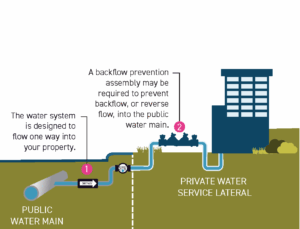
Backflow is the reverse flow of water from a non-potable water source into the drinking water system, potentially contaminating your drinking water. Backflows can occur at unprotected cross-connections due to pressure differences.
Backpressure
When the pressure in a non-potable water source (such as a boiler) is greater than the pressure in the drinking water system, contaminants from the non-potable source can be pushed into your drinking water. Buildings four or more stories high with booster pumps may generate backpressure.
Backsiphonage
When there is a sudden drop in the drinking water system pressure, such as during firefighting or a water main break, a vacuum or siphoning effect can draw non-potable water and any contaminants present into your drinking water.