

Recycled water is treated wastewater that is safe for irrigation. It is not used for drinking water but instead is transported through purple-colored pipes to select locations for limited uses. The use of purple pipes is used throughout communities to avoid potential cross-connection to drinking water pipes. Recycled water is strictly regulated and monitored by federal, state, and local governments to meet all public health and safety guidelines.
Similar to other communities, JCSD’s recycled water will be used to irrigate landscaping and grass areas at our local parks, schools and greenbelts, as well as for landscaping areas at business and along roadway frontages and medium areas that are along the proposed pipeline alignments.
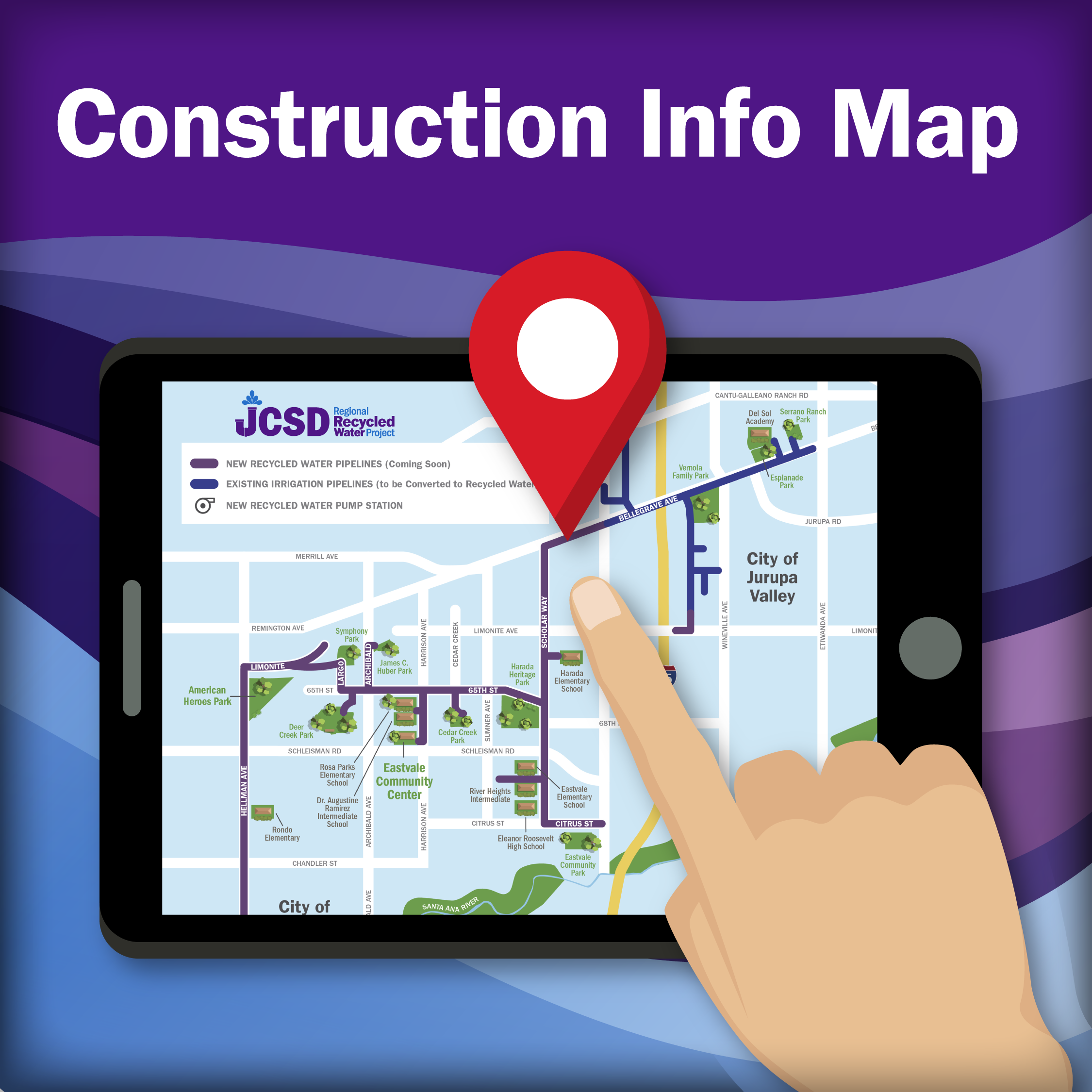
Construction to install the purple pipeline will begin late 2025, and distribution of the recycled water is expected to begin by the end of 2026 or early 2027. Click the link for the construction interactive info map to view the locations of construction.
Construction Schedule:
Monday to Friday (except for holidays)
8:30 a.m. to 3:30 p.m.
Some work will take place at night in non-residential areas. The project is expected to be complete in 2027.
Yes! Recycled water is permitted to be used for a wide range of applications, including landscape irrigation. As a responsible supplier of recycled water, JCSD will provide only highly treated, filtered and disinfected water that meets all federal, state and local regulations for use on parks, schools, landscape areas, golf courses and as well as other commercial and industrial uses.
No. The pipes distributing recycled water are a purple color and are a separate system from pipes distributing drinking water. The purple color pipe is nationally recognized as recycled water to avoid potential cross connection to drinking water pipes. Many studies have been conducted on recycled water. To date, no health-related problems have been traced to any of the water recycling projects currently operating in California.
Yes. The use of recycled water for irrigation lessens the demand for drinking water, which reduces the amount of water being drawn from the local aquifer. Lessening the effects of drought and ensuring an adequate water supply are extremely important.
There are strict federal, state and local laws and regulations governing the production and use of recycled water. All of the laws are designed to ensure recycled water is safely used. The rules also define how recycled water can be used and what required signage is needed and where it must be displayed.
No, JCSD’s recycled water is not safe for people to drink. “Recycled Water” signs will be posted at all points where recycled water is used.
Yes. Recycled water is a reliable water supply source even during a drought. Even when there might be restrictions on drinking water, there are typically no restrictions for recycled water use.
The JCSD Recycled Water Program is expected to begin distribution in 2027.
The recycled water is collected and treated at the Western Riverside County Regional Wastewater Authority (WRCWRA) Treatment Plant located at the southern end of the City of Eastvale. Most of JCSD’s wastewater flows to this plant, where it is already treated to meet recycled water quality regulations.
The purple pipelines that will contain recycled water are being constructed under roadways between the treatment plant and the recycled water use locations at various parks, schools and other landscaping irrigation locations. JCSD has reached out to specific public agencies, schools and businesses that meet the required criteria and are located near the planned distribution pipeline.
We like your spirit, but for now, the answer is no. Recycled water operates on a separate system from drinking water. As a result, new pipes need to be installed to deliver the recycled water. Installing new piping to all homes would be expensive. Therefore, it makes more sense for users with the largest irrigation needs, such as parks, golf courses and greenbelts to receive recycled water.
The Western Riverside County Regional Wastewater Authority (WRCRWA) Treatment Plant meets effluent (wastewater) and recycled water quality standards through its primary, secondary and tertiary treatment processes. The Plant also has solids handling processes to thicken, digest, dewater and dispose of solids produced from the wastewater. The processes of wastewater treatment are summarized as follows:
1. Primary Treatment: Wastewater flow enters the treatment facility through two force mains. Primary treatment consists of coarse screening, grit removal, flow metering, primary clarification and flow equalization.
2. Secondary Treatment: After passing through the primary treatment processes, secondary treatment occurs through conventional activated sludge in two bio-reactors. The activated sludge then passes through secondary clarification, where return activated sludge is pumped back to the bio-reactors and waste activated sludge is sent to the digestion process.
3. Tertiary Treatment: Effluent from the secondary clarifiers enters the tertiary treatment processes. This treatment consists of a flash mix station, where a coagulant can be injected if high turbidity is detected upstream or downstream of the filters. Flow then passes through tertiary filters, flow metering and chlorine disinfection.
4. Recycled Water: As part of JCSD’s proposed recycled water system, treated wastewater from the chlorine disinfection will then be delivered to the proposed recycled water storage and pumping system. This system consists of lift pumps, a storage tank and the proposed recycled water distribution pumps.
Other Ways to Stay Informed
- The monthly JCSD e-newsletter and social media channels will often include updates about the project.
- Email for Recycled Water Questions
- Phone: (951) 727-8009